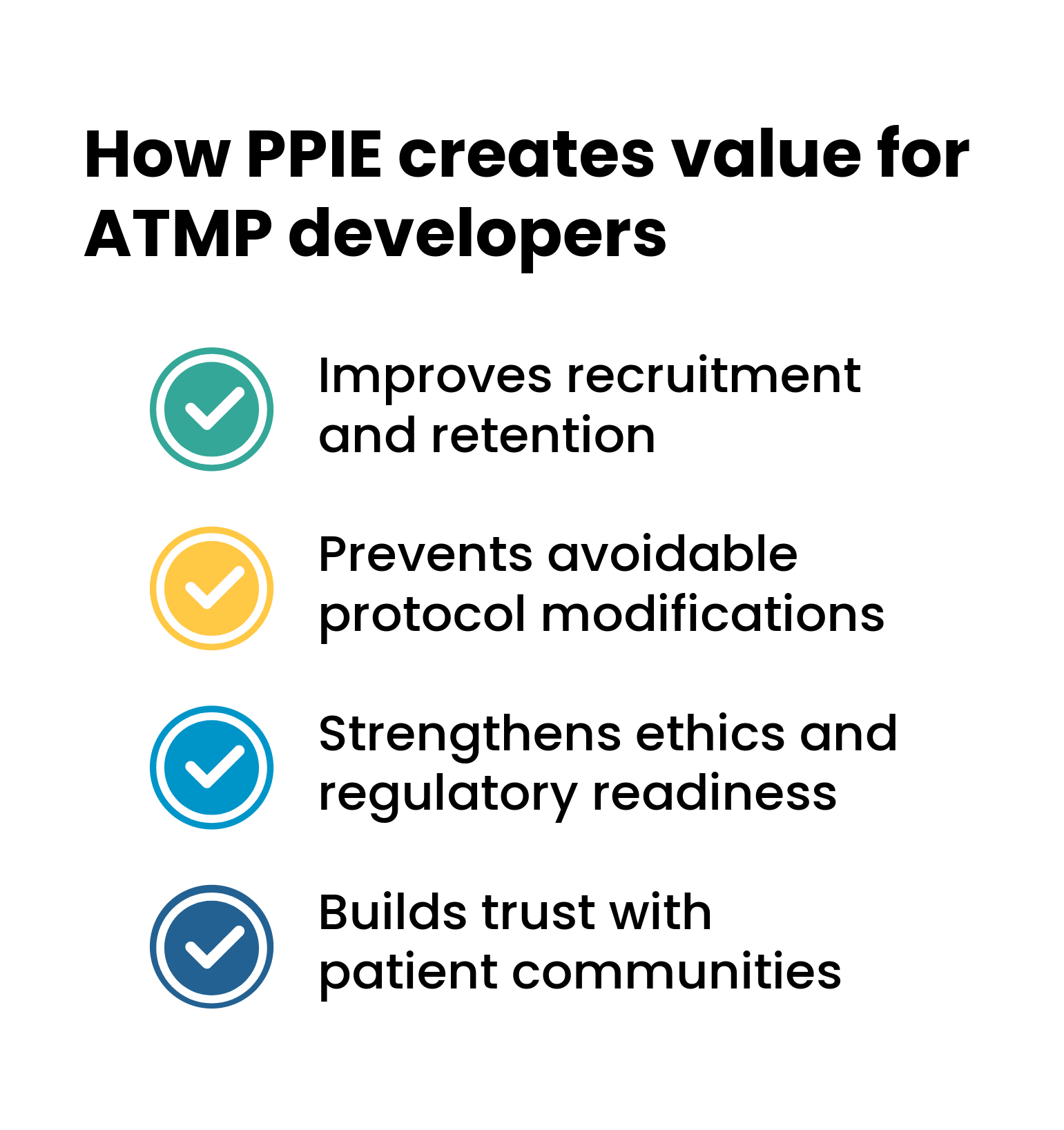
Improving recruitment and retention
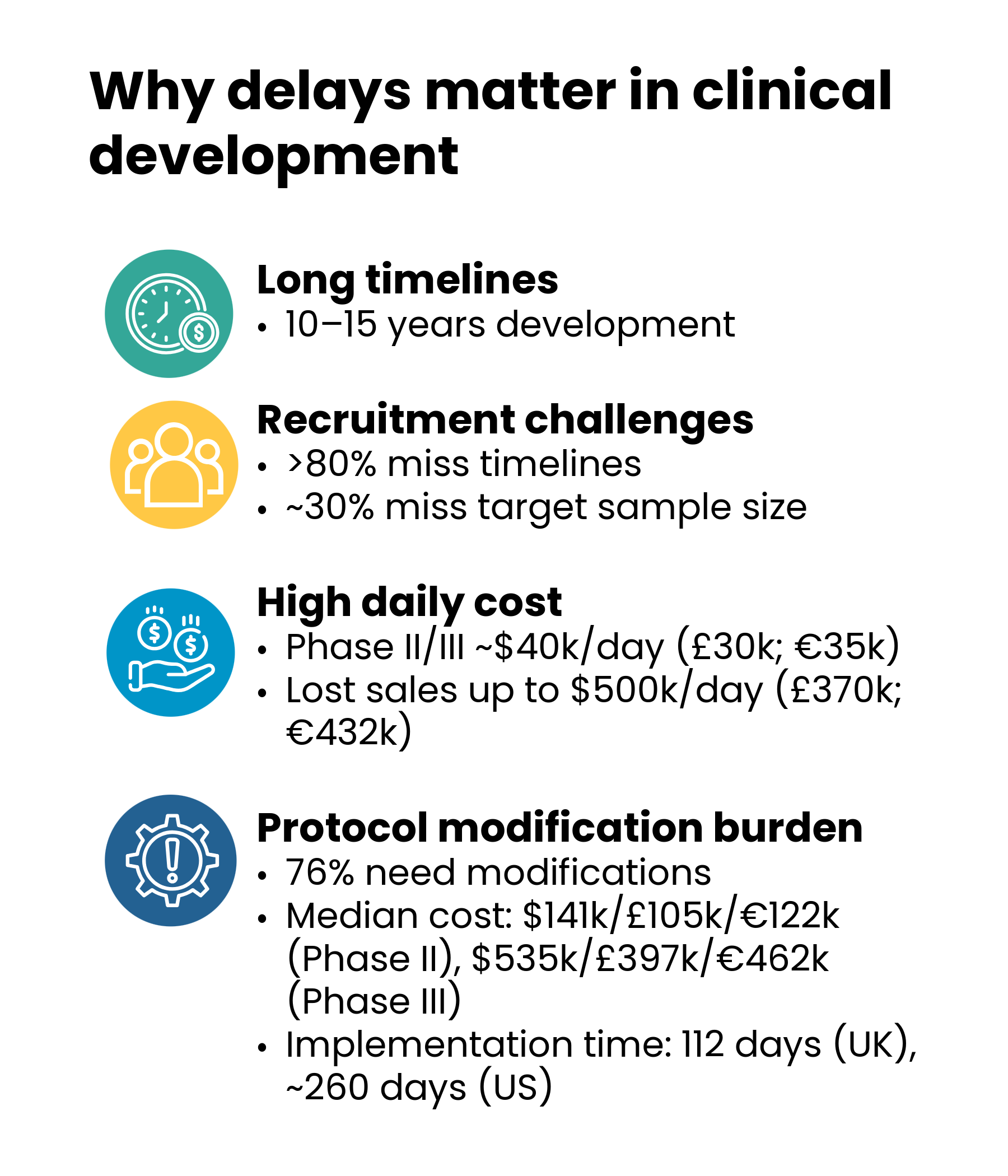
Early and meaningful patient input can improve recruitment and retention, two of the most common causes of delay. Evidence from a systematic review and meta-analysis found that PPIE improves both enrolment and retention, especially when contributors have lived experience of the condition (Crocker et al., 2018).
PPIE can improve recruitment and retention by helping trial teams identify barriers before a study opens. Patients and carers may improve the clarity and tone of recruitment materials, highlight concerns that could deter participation, explain what would make participation worthwhile, and identify practical burdens likely to lead to drop-out. For example, they may flag clinic visit schedules that are unrealistic for people balancing work, caring responsibilities, fatigue, or travel limitations.
Developers can then use this input to refine participant-facing materials, recruitment approaches, visit schedules, and support arrangements. Even modest improvements in recruitment and retention can shorten timelines, reduce the risk of under-enrolment, and improve delivery predictability. This matters particularly for ATMP programmes, which often face tighter operational dependencies and smaller eligible patient populations.
Reducing avoidable protocol modifications
PPIE can also help identify design problems before they become modification issues. Patients may highlight burdensome procedures, unrealistic visit schedules, unclear information, barriers to participation, or broader concerns about protocol feasibility that developers might otherwise overlook (Boote, Baird and Sutton, 2011; Edwards et al., 2011).
Addressing such issues early can improve study acceptability, support smoother trial delivery, and reduce the likelihood of costly downstream changes.
Reducing avoidable protocol modifications lowers direct implementation costs, stabilises timelines, and reduces operational disruption, which may be especially important for ATMP programmes with small patient populations and narrow launch windows.
Strengthening ethics and regulatory readiness
PPIE may also reduce regulatory delays by improving participant-facing documents, consent materials, and the clarity and relevance of trial design before submission. In the UK, this is particularly relevant under the combined review process (Health Research Authority, 2026), where the Medicines and Healthcare products Regulatory Agency (MHRA) and a Research Ethics Committee (REC) review applications in parallel and issue requests for further information jointly. Although PPIE is not a formal requirement, issues raised during REC reviews can nonetheless delay overall approval. Beyond REC reviews, sponsors are generally expected to incorporate patient perspectives into trial design and, where PPIE has not been undertaken, provide a clear justification to the HRA. The recently updated ICH E6(R3) guidelines (ICH, 2025) also included the requirement for sponsors to consider participant perspectives in the design and conduct clinical trials.
Effective PPIE—particularly in the design of participant-facing materials—can help ensure that the condition, treatment rationale, potential benefits, risks, and practical implications of participation are communicated clearly and meaningfully. It can support informed consent, demonstrate a patient-centred approach to development, reduce avoidable misunderstandings and clarification requests, and make the trial and intervention easier for ethics committees to evaluate. For ATMPs, which are often scientifically complex and unfamiliar to non-specialists, this may be particularly valuable.
Building trust and long-term engagement
PPIE can help build trust with patient communities. That trust can strengthen recruitment, retention, and engagement, especially among underserved groups (Crocker et al., 2018), while also supporting company reputation and future relationships with patient organisations and communities.
In the ATMP context, this value may extend beyond trial delivery. Patient communities can help articulate unmet need, treatment burden, meaningful outcomes, carer impact, and benefits that are not always fully captured in clinical endpoints or economic models. Early PPIE can therefore support the development of patient-centred evidence and narratives that may later strengthen discussions with Health Technology Assessment (HTA) bodies, payers, and reimbursement decision-makers. Seen in this way, PPIE is not only a trial-delivery tool but also a longer-term access asset.