About the heart
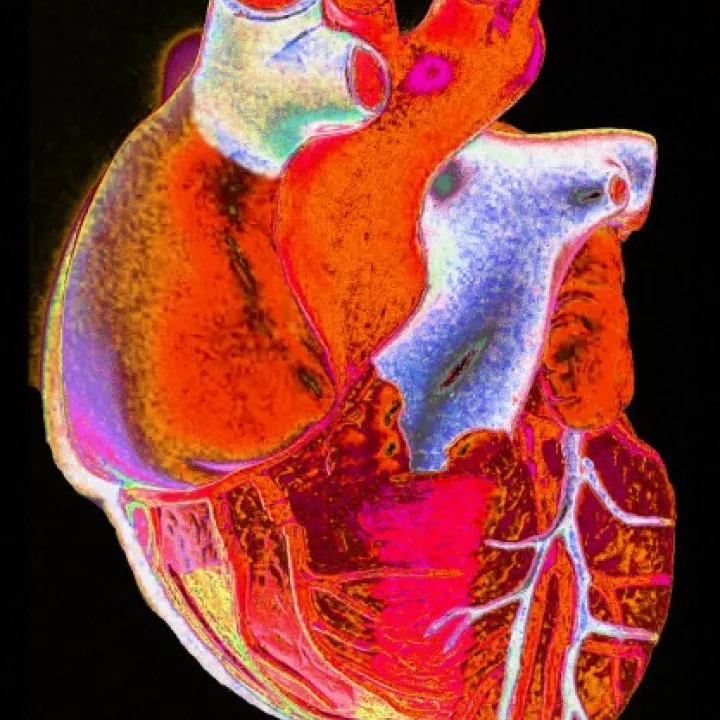
The heart is a muscle, and its job is to pump blood around the body. It does this by contracting, or squeezing, in rhythm, to push blood out through the blood vessels. Each contraction forces blood out of the heart, then the muscle relaxes, allowing the heart to refill with blood before the next squeeze. Blood carries the oxygen and nutrients that every cell in the body needs to survive, and it carries away the waste products that cells produce.
The heart is made up several different cell types, including:
Cardiomyocytes: the muscle cells that make it possible for the heart to contract.
Pacemaker cells: a small population of cells that control the rhythm of the heartbeat, by generating electrical signals that tell the heart muscle when to contract.
Fibroblasts: produce and maintain the connective tissue that helps the heart hold its shape under the constant mechanical stress of beating.
Smooth muscle cells: found in the walls of the blood vessels that supply the heart, helping to regulate blood flow into the heart muscle.
The heart is the first organ to form during development of the body. When an embryo is made up of only a few hundred cells, each cell can get the nutrients it needs directly from its surroundings. But as the cells divide and multiply to form a growing ball, it soon becomes impossible for nutrients to reach all the cells efficiently without help. The cells also produce waste that they need to get rid of. Thus, the first organ system to develop is the heart, blood and circulatory system, so that nutrients and waste can be transported throughout the growing embryo. The heart continues carrying out this vital job throughout our lives.